Your website is not the lever you think it is
If ChatGPT is looking for what your business offers, your own site is not what gets you found.
McKinsey's analysis of AI search put a brand's own properties at 5 to 10 percent of the sources these systems reference. The other 90 to 95 percent is written by somebody else.
What AI actually reads
Reviews. Forums. Independent coverage. Anything that is not paid media and not written by you.
The pattern is consistent: these systems weight sources they judge to be independent of the subject. Your site is treated as what it is, a party with an interest in the answer.
Why this feels wrong
You spent money on the website. It says what you do better than anyone else says it.
That is exactly the problem. Your own site telling everyone how good you are does not move an AI system, because every business does that and none of it distinguishes anyone.
Where blogging still fits
Blogging still works. It works differently than it used to.
A post that asserts your excellence does nothing. A post that answers a real question and cites sources that are clearly independent does two things. It gives the system something quotable, and it associates your name with a specific answer rather than a general claim.
How to build the 90 percent
1. Count what already exists
Search your category and look at what got cited. That is the shape of the source pool you are missing from.
2. Go after reviews first
They are the highest-volume independent source about most businesses and the easiest to influence honestly.
3. Get named in someone else's work
A quote, a podcast, a comment, a case study on their site. One mention on an independent page outweighs a page of your own copy.
4. Answer questions in public
Forums and communities where your customers actually ask. The answer becomes a citable source with your name on it.
5. Cite independently when you do publish
Your posts should point outward at real sources. That is what makes them readable as evidence rather than marketing.
What this does not mean
It does not mean stop maintaining your website. It has to exist, it has to be accurate, and it still converts the people who arrive.
It means the website is the destination, not the engine. Building more of it will not fix an AI visibility problem caused by the absence of everything else.
The decision
Stop asking what to add to your site. Ask what independent source is going to mention you next, and go create the reason.
Sources
- McKinsey: New front door to the internet, winning in the age of AI search (16 October 2025). A brand's own sites comprise 5 to 10 percent of the sources AI search references.
- Jeff Fargo, Fargo Factor Insight: Why AI Recommends Your Competitor When You Know More
Transcript
Verbatim from the Fargo Walks clip, as recorded.
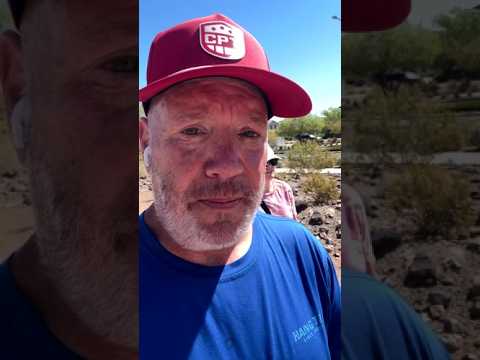
If ChatGPT is searching for whatever your business offers, you're not going to be found because of your website. McKinsey said so last month. 99% of AI search is third party citations, third party data, not self-generated. We already know how great you are. Other people need to be talking about how great you are. So that's reviews, that's forums, that's anything else that is not paid media. Definitely be blogging, but the blogs have to have citations of sources that are obviously third party and not paid. I'm Jeff Fargo. I help businesses get found through AI search. Go forth.
Note on the numbers: the clip says 99 percent and last month. McKinsey's published figure is 5 to 10 percent for a brand's own sites, which puts third-party sources at 90 to 95 percent, and the article was published in October 2025. The correct figures are used throughout this piece.
Jeff Fargo is the founder of Fargo Factor and host of Fargo Talks. Fargo Factor advises established businesses on AI Search Authority, AI Decision Systems, and selective AI-enabled implementation.
WHEN THE DECISION MATTERS
The answer is given before your site loads.
Fargo Factor helps established businesses get found in AI search, so the answer a buyer receives includes them instead of a competitor.