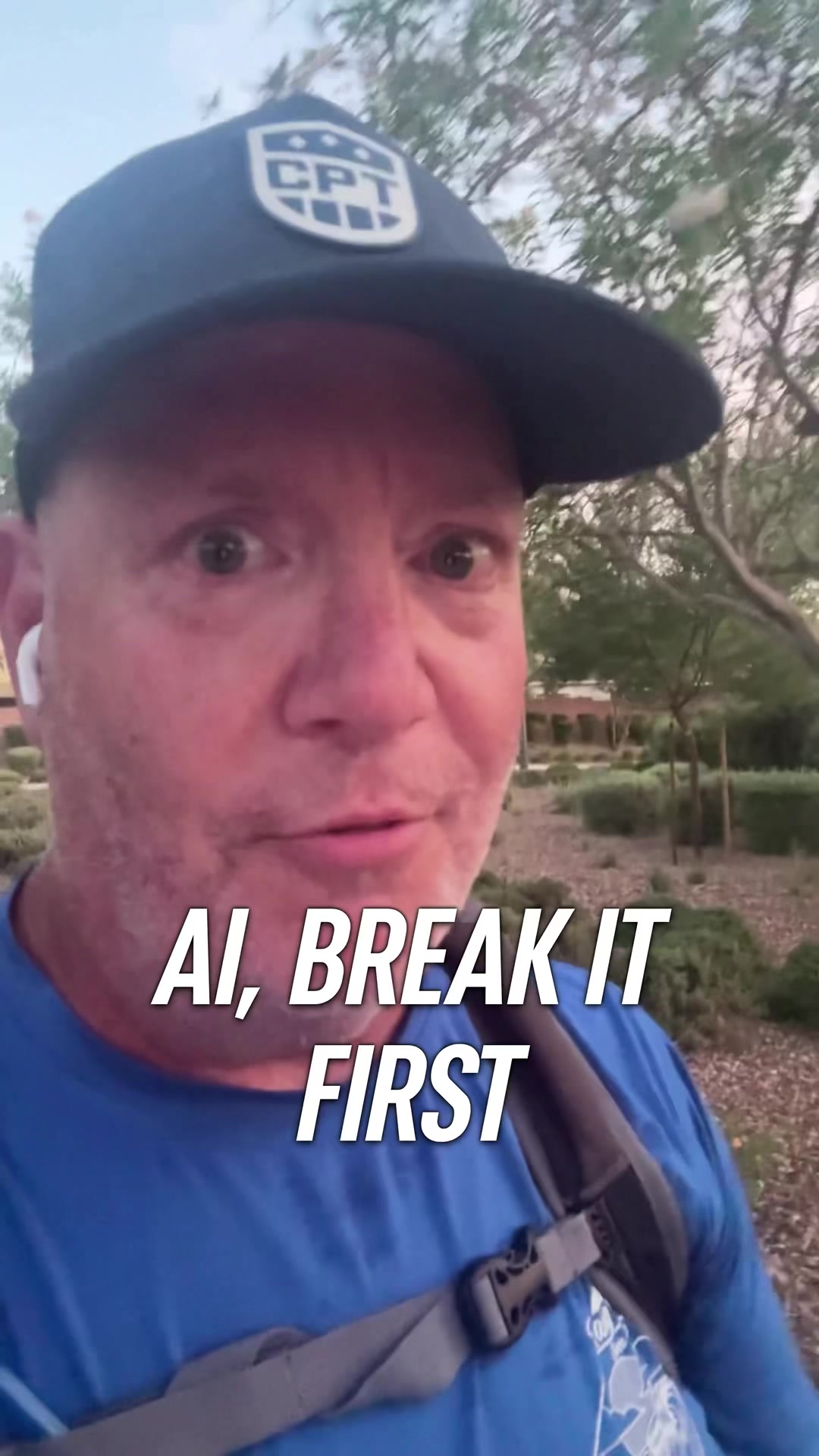
Before I send out a proposal or deploy a new system, I ask AI to absolutely eviscerate it.
I give it one premise:
It is six months from now. This thing went nowhere. It died. What did I miss?
That is a pre-mortem. Instead of waiting for the project to fail and explaining it afterward, you assume failure before launch and look for the reasons while you can still change something.
How to Run a Pre-Mortem With AI
1. Give AI the actual proposal or system
Do not ask for generic risks. Give it the thing you are about to send, approve, or deploy so the criticism has something concrete to attack.
2. Assume the failure already happened
Move the conversation into the future. Tell AI the project failed six months from now.
The wording matters because you are no longer asking, “Could this fail?” You are asking for plausible explanations of a failure you have told it already happened.
3. Ask: What did I miss?
Make AI look for weaknesses, assumptions, dependencies, and failure points that are easy to ignore while you are still excited about the plan.
The output is not a prediction. It is a list of things worth examining before you move forward.
4. Fix the useful weaknesses before launch
Review what AI finds. Some risks will matter. Some will be noise. The value is getting another chance to see a serious weakness while changing it is still cheap.
Why the Pre-Mortem Exists
Gary Klein popularized the project pre-mortem as a way to surface reservations before a project begins. His Harvard Business Review explanation starts with the same mechanism: assume the planned project has already failed, then generate plausible reasons for its demise.
The idea builds on research into prospective hindsight, the process of explaining a future event as though it has already occurred. A 1989 study by Deborah Mitchell, J. Edward Russo, and Nancy Pennington examined how that shift in temporal perspective changes the explanations people generate for future events.
That is the useful connection to AI. AI gives you a fast adversarial partner for generating possible explanations, but the decision about which risks are real is still yours.
What the Evidence Does Not Prove
A pre-mortem is not a guarantee that a project will succeed, and the research base is not strong enough to pretend otherwise.
More recent research has questioned whether pre-mortems always improve judgment. A 2022 Academy of Management paper found that people using pre-mortems may focus more attention on factors outside their control than people using alternative prospective-thinking methods.
So use the technique for what it is good at: forcing weaknesses into the conversation before launch. Do not treat every failure scenario AI generates as equally likely or equally useful.
Sources
- Jeff Fargo, Fargo Talks: I Make AI Eviscerate My Proposal Before I Send It
- Gary Klein, “Performing a Project Premortem,” Harvard Business Review — the practical project-management method behind the pre-mortem.
- Mitchell, Russo & Pennington, “Back to the Future: Temporal Perspective in the Explanation of Events” — the 1989 prospective-hindsight research underlying the idea.
- Academy of Management Proceedings: “Problems with Premortems” — later research identifying limitations and possible attribution bias in the technique.
Transcript
Verbatim from the Fargo Walks clip, as recorded.
Before I send out a proposal or deploy a new system. I ask AI to absolutely eviscerate it. I tell it, it's been six months. This thing went nowhere. It died. What did I miss?? It's called a pre-mortem. And it'll help find those weak spots right now that can avoid some serious problems in the future. I'm Jeff Fargo. I can help streamline and scale your business with AI. Go forth.
Jeff Fargo is the founder of Fargo Factor and uses AI to pressure-test proposals, systems, and business decisions before they go live.
WHEN THE DECISION MATTERS
Use a repeatable review before important decisions
A pre-mortem is one review technique. Fargo Factor helps business owners make the larger decision process clearer and more repeatable when AI is involved.